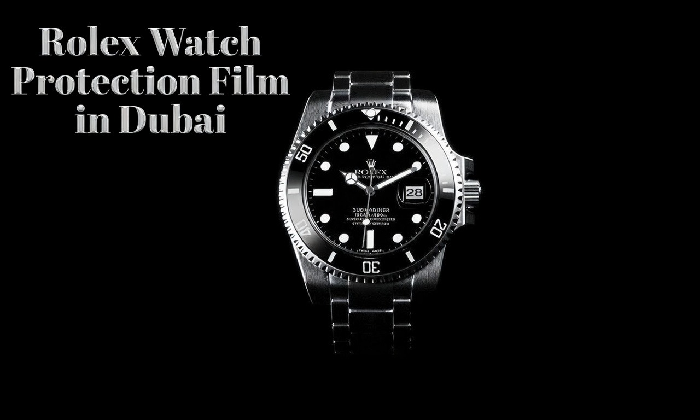
Rolex is the most purchased luxury watch brand in the UAE. It is also the brand whose owners most frequently ask about protection film, because Rolex watches are worn daily, they are significant financial investments, and the condition of a Rolex’s original finish is one of the most important factors in its resale value on Dubai’s active pre-owned market. This article covers everything a Rolex owner in the UAE needs to know about protection film before making a decision.
Why Rolex Watches Are Particularly Worth Protecting
Rolex uses two primary surface finishes across its collection. Oystersteel, the proprietary 904L stainless steel alloy used across the sports and professional collection, takes both polished and brushed finishes. The brushed flanks of a Submariner, GMT-Master, or Daytona case scratch in a way that is immediately visible against the directional grain of the original finish. Once scratched, restoring a brushed finish requires polishing by a watchmaker, which removes a microscopic layer of metal. Repeated polishing over years gradually rounds the sharp case edges that are a defining aesthetic characteristic of modern Rolex references.
The Jubilee and Oyster bracelets, which are among the most sophisticated bracelet constructions in watchmaking, develop play between links with wear, and the outer surfaces of the links accumulate scratches from contact with surfaces during daily wear. On a bracelet that may have cost 30,000 AED or more as part of the watch’s total price, this wear is financially significant.
Which Rolex References Have Dedicated Protection Film Kits
The protection film kits available for Rolex cover the brand’s full current and recent production lineup. The Submariner in its steel, two-tone, and white gold references, has model-specific kits. The GMT-Master II, including the Pepsi, Batman, and Sprite bezel references, has dedicated cuts that accommodate the distinctive bezel insert geometry. The Daytona, Datejust in both 36mm and 41mm sizes across Oyster and Jubilee bracelet configurations, the Day-Date in 36mm and 40mm, the Sky-Dweller, the Explorer series, and the Yacht-Master references all have precision-cut kits designed to their specific dimensions.
The specificity matters because Rolex cases have complex geometry. The lug profile, the chamfered case edges, the crown guard shape, and the clasp mechanism differ between references in ways that require custom templates rather than generic cuts.
What Areas of a Rolex Can Be Protected
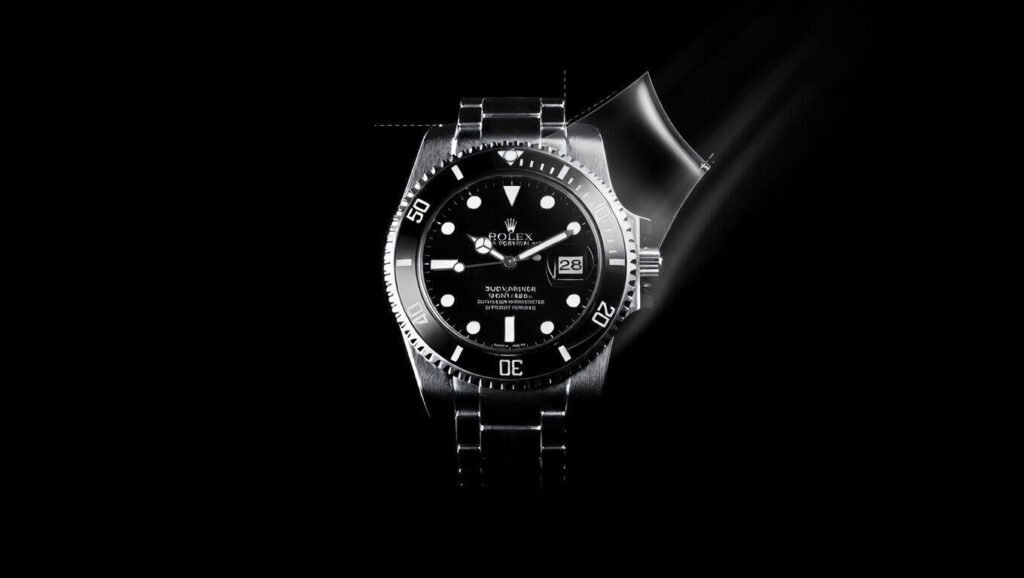
A complete protection film application on a Rolex covers the case flanks and top surfaces, the bezel outer edge, the bracelet outer links across the full length, the clasp including the Oysterlock or Crownadjust mechanism, and the crown guards. The crystal itself, whether sapphire or, in the case of vintage references, acrylic, is typically not filmed because modern sapphire crystal is inherently scratch-resistant to a degree that the case metal is not.
The areas that matter most from a visible wear perspective are the bracelet center links on Jubilee and Oyster bracelets, which are the first surfaces to show contact marks, and the case flanks between the lugs, which accumulate wear from sleeve contact. These areas, covered properly, represent the primary cosmetic protection benefit.
The UAE-Specific Wear Patterns on Rolex Watches
Wearing a Rolex in Dubai creates specific wear patterns that owners in cooler climates do not experience at the same rate. The combination of heat and perspiration accelerates the breakdown of the natural oxide layer on steel surfaces, making them slightly more susceptible to contact marking. Sand, which is present in the Gulf environment and finds its way onto surfaces in ways that are not always obvious, is an abrasive that creates fine surface scratches on unprotected cases and bracelets. Air conditioning environments mean that watches experience significant temperature cycling, which, over time, can affect any adhesive-backed material, though quality watch films are engineered to handle this without lifting.
The Rolex Service Interval Consideration
Rolex recommends service intervals of approximately ten years for modern references. During a Rolex service performed by an authorized service center, the watch is typically polished as part of the process unless the owner specifically requests that polishing be omitted. If you have maintained original case sharpness and bracelet condition through the use of protection film, instructing the service center to clean without polishing preserves the original finish quality and case geometry. This is an important instruction to give explicitly, as it is not the default service protocol.
Where to Get Rolex Protection Film Applied in Dubai
Professional installation in Dubai is available as an in-home service, meaning a technician comes to your location rather than requiring you to leave your watch with anyone. For Rolex owners who are rightly cautious about their timepiece leaving their possession, this is a significant practical consideration. The complete kit, including the protection film and professional installation, represents a tiny fraction of the watch’s value, making it one of the most cost-effective protective measures available to any Rolex owner in the UAE.